Explore Pulsar thermal rifle scopes, including the new Thermion 3 LRF XT60 and XR60, the established Thermion 2 range and the compact Trail 3 LRF series. From wide-view models for observing mixed ground to scopes with higher starting magnification, each offers a different balance of sensor resolution, field of view and handling. The comparisons below explain those differences so you can choose a Pulsar thermal scope around the features you will use.
New Pulsar Thermion 3 LRF: XT60 or XR60?
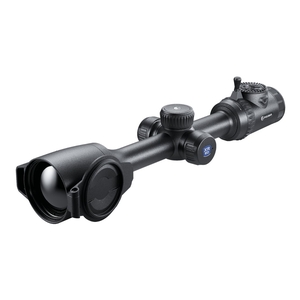
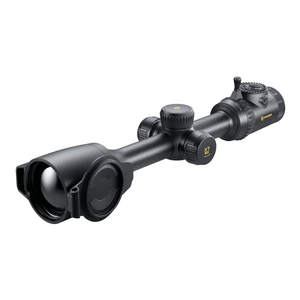
The Thermion 3 series brings revised controls to Pulsar’s familiar tube-mounted design. Both models combine a 60mm F1.0 objective, 2560×2560 AMOLED display, 65mm eye relief and integrated laser rangefinding up to 1,200m. Their sensors and starting magnifications create distinctly different views, making the choice more useful than simply comparing maximum zoom.
|
Model |
Thermal sensor |
Magnification |
Horizontal view at 100m |
Stated battery life |
| Thermion 3 LRF XT60 |
1280×1024 |
2–24× |
25.7m |
Up to 8.5 hours |
| Thermion 3 LRF XR60 |
640×480 |
4–40× |
12.8m |
Up to 14 hours |
Field-of-view figures apply at the lowest magnification. Battery runtime depends on temperature and operating conditions.
The Thermion 3 LRF XT60 combines a 1280×1024 HD sensor with a low 2× starting magnification. Its view spans approximately twice the horizontal width of the XR60 at the same distance, giving you more room to follow movement and assess the surrounding ground before increasing magnification to inspect detail.
The Thermion 3 LRF XR60 starts at 4×, providing a more magnified initial image within a narrower view. Its longer stated battery life is another useful distinction for extended sessions. Choose between them according to the starting view, sensor resolution and runtime you need, rather than assuming the highest maximum magnification makes the better scope.
More accessible zoom and focus controls
Thermion 3 introduces a physical zoom ring on the eyepiece, with smooth, stepless adjustment and a removable throw lever. Zoom direction can be reversed in the settings to suit your preferred operation. Focusing moves to the central turret, allowing adjustment with either hand without reaching towards the objective.
An eyepiece proximity sensor places the display into standby between observations. Two Picture-in-Picture layouts let you examine an enlarged area while retaining the wider scene, and the conventional 30mm tube preserves the familiar Thermion mounting format.
Which Pulsar thermal scope is best for me?
Start with the view and mounting format you need. Thermion 3 XT60 combines the highest sensor resolution in this selection with a wide starting view. XR60 provides higher starting magnification and longer stated battery life. Thermion 2 offers further combinations, including the low-magnification XL50, while Trail 3 provides a compact rail-mounted alternative. Compare the features you will use alongside the complete setup price.
For a broad starting view
A wider field of view keeps more of the surrounding ground visible and gives you more space to follow movement. Alongside Thermion 3 XT60, consider the Thermion 2 LRF XL50, which covers 24.6m at 100m at its lowest 1.75× magnification. The Thermion 2 XP50 Pro provides a 21.8m view at 2×.
For a more magnified initial image
Thermion 3 XR60 and Thermion 2 LRF XG60 both start at 4×, with a horizontal view of 12.8m at 100m. They present a closer view at the lowest setting, but show less surrounding ground than the wider-view alternatives. This is a practical trade-off to consider if your observations regularly alternate between nearby subjects and more distant ground.
For a compact rail-mounted setup
Trail 3 uses a monoblock housing and compatible rail mount instead of a conventional scope tube. It offers a different mounting and handling arrangement from Thermion, so consider the complete rifle setup as well as the imaging specifications.
Choosing between Thermion 2 models
Thermion 2 remains a useful part of the range, with options that differ substantially in starting magnification, sensor resolution and integrated rangefinding. A larger objective does not automatically provide a wider view, and models with the same sensor resolution can still present the scene differently.
Thermion 2 XP50 Pro and LRF XL50
The Thermion 2 XP50 Pro combines a 640×480 sensor, 50mm F1.0 objective and 2× starting magnification. Separate versions are available with and without integrated laser rangefinding, allowing you to decide whether distance measurement needs to be built into the scope.
The Thermion 2 LRF XL50 pairs a 1024×768 sensor with lower 1.75× starting magnification and a wider field of view. Both are worth comparing when you want a broad initial image, with the XL50 offering higher sensor resolution and the XP50 Pro having lower published NETD figures.
Thermion 2 LRF XG60, XP60 and XL60
These three models share a 60mm F1.1 objective, 800m laser rangefinder, 2560×2560 Micro-OLED display and 65mm eye relief. Their starting views are different:
- XG60: 640×480 sensor, 4× starting magnification and a 12.8m horizontal view at 100m.
- XP60: 640×480 sensor, 3× starting magnification and an 18.1m horizontal view at 100m.
- XL60: 1024×768 sensor, 2.5× starting magnification and a 20.5m horizontal view at 100m.
The XG60 provides the most magnified starting image of the three. The XL60 combines higher sensor resolution with the broadest view, while the XP60 sits between them for starting magnification and field width. These differences provide a more useful basis for choosing than objective size alone.
Trail 3 LRF XQ50 or XR50?
Both Trail 3 models combine a 50mm F1.0 objective with 1,200m laser rangefinding, a Full HD AMOLED display and a removable LPS7i rechargeable battery. They also support onboard recording and Stream Vision 2 connectivity.
The Trail 3 LRF XQ50 uses a 384×288 sensor and starts at 3.5×, showing 13.1m horizontally at 100m. The Trail 3 LRF XR50 provides a 640×480 sensor, lower 3× starting magnification and a wider 15.4m view at 100m.
The XR50 offers more sensor pixels and a broader starting view. The XQ50 has lower published system NETD, illustrating why resolution and sensitivity should be considered separately. Check the mount supplied with your chosen configuration when comparing the complete purchase price.
Understanding Pulsar thermal scope specifications
Sensor resolution and thermal sensitivity
Sensor resolution describes the number of pixels capturing thermal information. NETD describes the ability to distinguish small temperature differences, with lower figures indicating greater thermal sensitivity. Check whether a specification refers to sensor NETD or system NETD before comparing numbers: they describe different measurements.
For example, Thermion 3 XR60 has a published system NETD below 18mK, while XT60 is below 20mK. The XT60 has the higher-resolution sensor. Neither number alone describes the complete viewing experience, so assess sensitivity alongside resolution, optics and field of view.
Detection distance and laser ranging
Detection distance describes the ability to detect a heat source, not a guarantee of identifying an animal at that distance. Laser ranging is a separate function that measures distance. Thermion 3 demonstrates the distinction: both models have a stated thermal detection distance of up to 3,100m, while their rangefinders measure up to 1,200m.
Pulsar thermal rifle scope FAQs
What are the main differences between Thermion 2 and Thermion 3?
Thermion 3 introduces stepless eyepiece zoom rings, central focusing and slimline 1,200m laser rangefinders. Its XT60 also brings a 1280×1024 sensor to the range. Thermion 2 offers more combinations of sensor, starting magnification and lens size, including models with and without integrated rangefinding. Compare individual models rather than treating each generation as a single specification.
Do all Pulsar thermal rifle scopes have a laser rangefinder?
No. Models carrying LRF in their name include integrated laser rangefinding. The Thermion 2 XP50 Pro is also offered without it, so check the complete product name and specification before choosing.
Can I use my existing riflescope rings?
Thermion models use a 30mm tube, but ring height, positioning and clearance must suit the individual scope and rifle. Trail 3 uses a rail-mounting format and needs a compatible mount rather than conventional scope rings.
Is display resolution the same as thermal sensor resolution?
No. Both Thermion 3 models have a 2560×2560 display, but their thermal sensors differ: 1280×1024 in the XT60 and 640×480 in the XR60. Compare sensor and display specifications separately.
Choose your Pulsar scope at Uttings
Uttings is a family-run Norwich business established in 1976. If you are deciding between Pulsar models, contact us to discuss their specifications and mounting requirements. You can also explore our wider range of thermal imaging rifle scopes to compare other options before choosing your setup.