


Bipods & Supports


Accu-Tac FC-HD50 Bipod - 7-10 Inches
Designed for .50 cal. Heavy duty and robust!
Accu-Tac FC4-G2 Bipod
Perfect for long-range, target, competition, airgun and tactical applications - totally versatile!
Accu-Tac FC-G2 Bipod With Arca Spec
Perfect for long-range, target, competition, airgun and tactical applications - totally versatile!
Accu-Tac SR-5 G2 Bipod
Adjustable, stable and secure!
Accu-Tac SR-5 G2 Bipod With Arca Spec
Adjustable, stable and secure!


Accu-Tac BR-4 G2 Bipod
Smaller compact design.
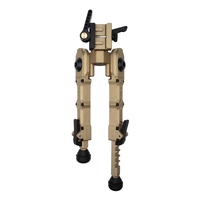
Accu-Tac BR-4 G2 Bipod With Arca Spec
Smaller compact design.

Accu-Tac WB-5 Bipod
Wide body. Great versatility.


Accu-Tac PC-5 Bipod
Pan and cant. Great versatility.
Accu-Tac PC-4 Bipod
Pan and cant. Great versatility.




Bipods & Supports
What Are Bipods and How Do They Work?
Bipods are stabilising supports designed to provide shooters with a steady, repeatable shooting platform. Whether you’re zeroing a rifle, competing in precision shooting, or practising marksmanship in the field, a bipod reduces unwanted movement and helps maintain accuracy over longer distances. By creating two points of contact with the ground, a bipod works much like a miniature tripod, but its lightweight construction and compact size make it easier to mount on hunting and sporting rifles without adding unnecessary bulk.
Modern bipods attach directly to fore-end fittings such as sling studs, Picatinny rails, M-LOK or KeyMod systems. Once fitted, they allow the shooter to deploy adjustable legs that lock securely in place. Many models also offer features such as tilt, pan, and cant adjustability, which help maintain a level sight picture on uneven terrain.
At Uttings, shooters of every skill level will find models suited to prone shooting, benchrest work, or dynamic field applications — all built to improve stability, comfort, and shot-to-shot precision.
How to Choose the Right Bipod for Your Needs
Height and leg adjustment
Bipods are available in different height ranges to suit prone, kneeling, and bench shooting. Lower models (typically 6–9 inches) offer maximum stability for prone precision shots, while taller units (9–13 inches or more) provide flexibility when shooting over vegetation or rough ground. Look for smooth, positive leg-lock mechanisms and quick-deploy features to support fast shooting scenarios.
Tilt, pan, and cant control
Tilt (or cant) is crucial when shooting on uneven terrain. A bipod with a tilting head allows the rifle to be levelled without repositioning the legs. Panning is useful for tracking moving targets or scanning across a field of view. Competitive shooters and hunters often favour bipods with fluid, controlled movement in both directions.
Mounting system compatibility
Ensure your bipod matches your rifle’s attachment point. Traditional sling studs remain common, but tactical and modern sporting rifles often require Picatinny, M-LOK, or KeyMod fitting options. Many premium models include adapter plates or offer modular mounting systems, helping you future-proof your setup.
Material quality and durability
Most bipods are constructed from lightweight aluminium, carbon fibre, or steel components. Carbon fibre designs provide impressive strength-to-weight ratios, while aluminium bipods offer durability at a sensible price point. Weather resistance, corrosion protection and reinforced joints all contribute to long-term reliability in harsh outdoor environments.
Weight and portability
For stalking and hunting, weight can be a decisive factor. Lightweight bipods reduce fatigue and help keep your rifle balanced. Benchrest shooters, on the other hand, may prefer heavier models that deliver enhanced stability.
To explore related support systems, many shooters also browse our selection of shooting rests and bags and rifle slings, which complement bipods by offering stability and comfort in different shooting positions.
Top Bipod Brands and Models at Uttings
Uttings stocks a carefully selected range of bipods from trusted manufacturers known for precision engineering and field-ready performance. You’ll find robust entry-level models ideal for newcomers, as well as advanced bipods for competitive long-range shooting.
Leading brands include compact, tactical-style models suited to modern sporting rifles, as well as classic hunting bipods that prioritise simplicity and reliability. Many of these models incorporate hardened locking mechanisms, smooth pivot systems, and non-slip rubber feet to maintain accuracy in changing weather and ground conditions.
Whether you prefer a folding leg design for fast deployment or a precision-engineered benchrest unit, Uttings provides options that suit rimfire, centrefire, air rifle and tactical platforms alike.
Bipod Tips and Expert Advice
Choosing the right bipod is only part of the equation. Using it effectively is equally important.
For maximum stability, ensure the legs are set at equal height and positioned firmly on the ground. On uneven surfaces, use the cant adjustment to maintain a level shooting position without over-extending one leg. When shooting prone, a lower bipod generally performs better, as it reduces the centre of gravity and minimises barrel rise.
Pairing your bipod with quality scope rings and a well-fitted riflescope helps you take full advantage of the improved stability by maintaining consistent eye alignment and sight picture. Many shooters also combine a bipod with a rear shooting bag for even greater precision.
Why Buy Bipods at Uttings
Uttings is a family-run outdoor retailer based in Norwich, established in 1976. With decades of specialist experience in field sports and shooting equipment, we pride ourselves on offering high-quality bipods from the world’s leading brands. Our reputation is built on expert product knowledge, outstanding customer service, and fast delivery across the UK. Every order is backed by more than 45,000 five-star Trustpilot reviews, reflecting our commitment to helping customers enjoy the great outdoors with confidence.
Bipods FAQs
What height bipod is best for prone shooting?
Most prone shooters prefer bipods in the 6–9 inch range, as they offer excellent stability and reduce rifle movement when lying close to the ground.
Do I need a bipod with tilt or cant adjustment?
Tilt adjustment is highly beneficial on uneven ground because it allows you to level the rifle without repositioning the legs, maintaining a stable shooting platform.
How important is panning on a bipod?
Panning helps you track moving targets or scan across open fields without lifting or shifting the rifle.
Are lightweight bipods strong enough for centrefire rifles?
Modern carbon fibre and aluminium designs are engineered for strength and recoil control, making them suitable for most centrefire platforms.
What mounting system should I choose for my rifle?
Match the bipod to your rifle’s attachment point. Sling stud models suit traditional rifles, while Picatinny, M-LOK, and KeyMod options are ideal for modern tactical setups.
Is a taller bipod better for rough terrain?
Taller bipods provide more clearance and comfort on uneven ground, although they can compromise stability compared with lower options.
Do bipods work well with rear shooting bags?
Yes. Combining a bipod with a rear bag creates a highly stable support system that improves long-range shot consistency.
Are rubber feet or spike feet better?
Rubber feet excel on hard surfaces, while spike feet offer superior grip on soil, grass, and uneven terrain.